Posts

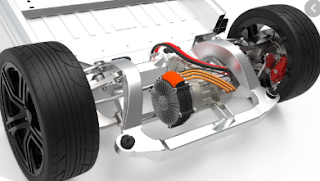
Motor sizing for EV

Image
MOTOR SIZING FOR AN ELECTRIC CAR.                                 Selecting the best suitable motor for electric vehicles involves maths and physics. Our aim is to calculate the torque requirement of the vehicle under different driving condition and selecting the motor which can deliver the required amount of torque. Factor to be considered: 1. Rolling resistance. 2. Grading resistance. 3.Aerodynamic drag. Electric vehicle parameters required: GVM-gross vehicle mass. r - wheel radius, v - velocity of the vehicle. A = frontal area. Cd- aerodynamic drag co-efficient. Crr- rolling resistance co-efficient. 1.Rolling resistance.              Rolling resistance is afforded by the floor on which the car is moving. It is also dependent on the tire material. Frr = GVM x g x Crr. Frr = Rolling resistive force. Crr - depends on tyre material, road/sur...

Batteries in series and parallel

Image
                                             2.  BATTERIES IN SERIES AND PARALLEL. Content: 1.Cell vs Battery. 2.Cells/Batteries in series. 3.Cells/Batteries in parallel. 4.Battery pack design. For all projects, we can't use a single cell and power up all circuits and components. We might need a voltage that is greater than the maximum voltage of a cell or we might have a current requirement that is greater than the single cell's current discharge capacity or we might need to power the circuitry for a long time . This blog will be useful for those who are into electric vehicle development or any projects which involve the usage of batteries. It has information about series and parallel connection of batteries. 1.Cell vs Battery. Li-ion cell Battery A Cell is a single unit that converts chemical energy to electrical whereas A batt...

Battery ratings

Image
1. Battery basics. Contents: 1.Voltage. 2.Current. 3.Capacity. 4.C-rating. 5.Watt-hour. 1.Voltage.              The voltage that we see on a cell is nothing but Nominal voltage . Nominal voltage is also referred to as average voltage. Battery manufacturers always mention nominal voltage on the cell/battery. Let's take an example of a Li-ion cell, it's nominal voltage is 3.7v . But it's maximum voltage is 4.2v when fully charged. The minimum voltage is 3v. Warning: Don't discharge the cell/battery below its minimum operating voltage that leads to battery damage. In the case of the Li-ion cell, it is 3v. *All of this information you can get in the battery/cell datasheet. If we are using a cell/battery directly to the load, then the load will not get constant voltage. Voltage keeps on decreasing. That is when the voltage regulators come into the play to provide a constant voltage. 2. Current.     ...